
The South Orlando Renter-to-Owner Equation: Why Renting Now Costs About the Same as Owning (and How to Make the Switch)
If you're renting in south Orlando right now, I want you to do me a favor. Open your banking app, or pull out your last lease, and look at what you pay every month. Really look at it.
I'm Daliah, and I help people across Central Florida make the move from renting to owning. Lately I've been having the same conversation over and over, and it almost always starts the same way: "I'd love to own, but I just can't afford it right now."
Here's what I've learned after walking a lot of renters through this: for many people in south Orlando, that belief is built on old math. The numbers have shifted. And once you see renting and owning side by side, they're a lot closer than most people think — sometimes about the same.
So let's walk through it together, the way I'd explain it to a friend over coffee. No jargon, no pressure. Just the numbers, and what they mean for you.
1. The Number Renters Already Know
Let's start with the number you already feel every month: rent.
Across Orlando, the average rent is sitting around $1,943 a month. If you need a three-bedroom — and most families eventually do — you're looking at $2,100 to $2,400. And here's the part that doesn't get talked about enough: it keeps rising. Every lease renewal, there's that little knot in your stomach wondering how much more it'll be this year. You build it into your budget, you cut somewhere else, and then twelve months later you do it all over again.
More than 60% of Orlando residents rent. That's most of us. And when most of a city rents, rent keeps climbing, because the demand never really drops off. You already know this — you've been living it.
So that's the first number. The one you know in your bones. Now let's look at the one you've probably been afraid to even calculate.
2. The Number Renters Assume They Can't Reach
Now here's the number most renters assume is way out of reach: the monthly cost of owning.
Let me keep it simple. When you own, your monthly payment is really three things stacked together: your mortgage (the loan on the home), your property taxes, and your insurance. That's it. Three line items instead of one line on a landlord's ledger.
On a home around $380,000 — which is close to the middle of the south Orlando market — at current rates, that total comes out surprisingly close to what a lot of people are already paying in rent. I'm not telling you it's identical down to the dollar. Insurance has gotten more expensive in Florida, and I'll be honest with you about that. One homeowner I worked with watched their insurance go from about $1,200 a year to around $6,800 — and that's one person's real story, not an average, so your number will be different. We'll look at real quotes for your situation, not guesses.
But here's the part that changes everything, and it's the part I want you to sit with: when you rent, every single dollar goes to someone else. Every month, forever. When you own, a piece of your monthly payment comes back to you as equity — the part of the home you actually own, growing a little bit every single month. You're paying yourself instead of paying your landlord's mortgage.
That's not a small thing. Over the years, it's the difference between having nothing to show for a decade of payments and having something that's genuinely yours. Think about where you were five years ago. If you've been renting that whole time, what do you have to show for it? Now imagine the next five years going the same way. Owning changes that trajectory.
And here's something people forget: your mortgage payment is mostly fixed. Property taxes and insurance can move a little, yes. But the mortgage itself — the biggest piece — stays the same for the life of the loan. Rent doesn't do that. Rent only goes one direction. Your mortgage, fifteen years from now, will feel very different than it does today, because everything else will have gotten more expensive around it. That's the quiet magic of a fixed payment in an inflating world.

3. The Hidden Help
Here's where a lot of renters stop cold. They do the mental math on a down payment, get a number that feels impossible, and shut the door before they ever talk to anyone.
This is my favorite part to talk about, because most people genuinely don't know what's out there. There is money available to help with your down payment — real money, not a gimmick — and a lot of it goes unused because people assume they won't qualify before they ever ask.
Let me name a few, in plain terms:
- If you work full-time in Florida — teacher, nurse, first responder, retail, office, restaurant, it doesn't matter — there's a program called Hometown Heroes that can give you up to $35,000 toward your down payment. You don't pay interest on it, and you don't pay it back until you sell or refinance. It's built for working people, and a lot of them never hear about it.
- Orange County has help that ranges from $10,000 all the way up to $70,000, depending on your income.
- The City of Orlando has its own program, up to $45,000.
A couple of honest notes, because I'd rather you trust me than get surprised later: these programs' amounts and who qualifies can change, and the details get updated over time. So when you're ready, we'll verify everything with the agency running each program before we count on a single dollar. But the point stands loud and clear: the down payment is not the brick wall people think it is. There's a door in it — you just have to know where to look.
I've worked with buyers earning a single income around $62,000 a year who got into a home using one of these programs plus an FHA loan. It happens more often than you'd believe, and it could be you.
If you're doing the math in your head right now, here's the honest version: the help exists, but it takes paperwork and it takes timing. Some programs run out of funding before the year ends, and they refill on a cycle. That's not a reason to panic — it's a reason to start the conversation early, so when a window opens, you're ready to step through it. That's part of what I do: I help you line up the pieces before you ever tour a house.
4. The Window
Now let's talk about timing, because this is the part that surprises people the most.
For a while, it was a seller's world. Homes sold in days, sometimes hours. Buyers felt like they had to waive inspections, offer over asking, and make decisions in a panic just to be taken seriously. That's not the market we're standing in right now.
In the four communities we're about to walk through, homes are sitting longer — about 42 to 50 days on average. (That's from research done in July 2026; the market always shifts, so we'll check what's current when you're ready.) The broader Orlando market runs even longer, and there are hundreds of homes in the area with price reductions right now. Inventory has loosened up — there are roughly two months of supply, which leans toward buyers.
Here's what all of that means for you, in real terms: sellers are negotiating again. You can ask for repairs without losing the house. You can ask for help with your closing costs. You can take a breath, sleep on a decision, and actually think it through. You're not competing against a stack of waived-inspection offers. You have room, and room is what makes a good decision possible.
If you tried to buy two years ago and gave up because every house was gone in a weekend, this is your notice that the ground has moved. The frantic, waive-everything market is behind us for now. What we have today is a market where a thoughtful buyer — someone who gets pre-approved, knows their numbers, and works with an agent who knows these neighborhoods — can actually win a home on fair terms. That's you, if you decide it is.
5. The Rate Reality
I know what you're thinking: "But the rates."
Yes, rates are higher than any of us would like. I'm not going to pretend otherwise. Here's how I frame it, the way I'd frame it for a friend across the table:
Buy the home, refinance the rate.
When rates come down — and they will at some point — you refinance into a lower monthly payment. But here's what you can't do: you can't go back and buy yesterday's home at today's price. And you can't refinance your rent. When rent goes up, that money is just gone, spent, moved on. When you own and rates eventually drop, you get to adjust your payment down while keeping the home you already chose.
The home is what matters. You secure the home now, and you can always work on the rate later. A lot of the buyers I work with plan to refinance within a couple of years, and we build that into the plan from day one — we run the numbers both ways so you know what you're signing up for now and what it could look like later.
Think of it this way: you're not marrying the interest rate, you're dating it. The rate is a temporary condition. The home is permanent. Nobody times the market perfectly — not me, not anyone. What you can do is get into the home, build equity from day one, and improve the financing when the opportunity comes. Renters who wait for the perfect rate often end up waiting through years of rent increases, and by the time rates drop, home prices have climbed past them. I've watched it happen.
6. Where the Math Works Best
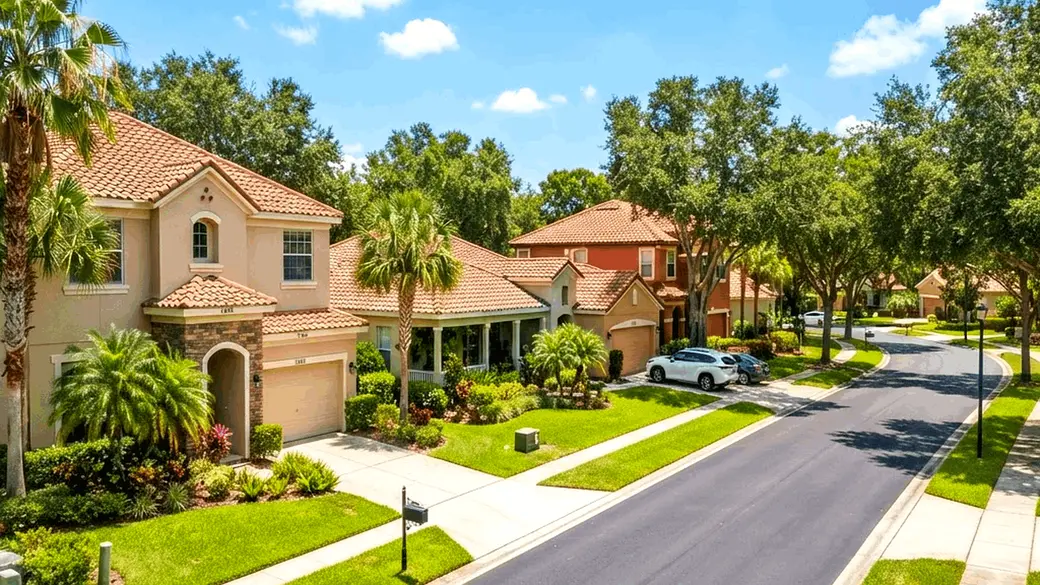
So where does this equation actually work in south Orlando? Let me show you four communities, each with one clear thing that makes it stand out. All four of them share the same ZIP code — 32837 — and that's worth a minute, because it teaches something important: communities in the same ZIP can offer very different options and very different costs. The ZIP doesn't define the lifestyle; the community does.
Peppermill (32837) — This is the quiet, low-key option. Almost no HOA fees — sometimes just a few dollars a month, and even those are often optional. That matters more than people realize, because when your HOA is tiny, your monthly costs stay low, and more of your budget goes toward the home itself. If you want to keep your monthly overhead as lean as possible, Peppermill is where I'd start looking. Average home prices here run around $395,000.
Whisper Lakes (32837) — If you want the most amenities for the price, this is your community. Pool, tennis courts, playground — it's built for a lifestyle, not just a place to sleep. It's central and easy to get around, and it genuinely feels like a neighborhood that has things to do right outside your door. The HOA here runs higher, around $160 to $225 a month, and that's the tradeoff: you pay more monthly, but you get a lot more in return. Homes average around $357,000.
Deerfield (32837) — This is the established family neighborhood. Quiet, settled, with a solid elementary school right in the mix. If you've got kids, or you're planning to, this is the community where people tend to put down roots and stay. It has its own feel: mature trees, established streets, the kind of place where neighbors actually know each other's kids. Homes average around $435,000, and the HOA is modest.
Heritage Village (32837) — This is the small, quiet one. Tucked between the bigger communities, it's the kind of place that flies under the radar. Homes average around $455,000, with an HOA around $42 to $51 a month. If you want a quiet spot, this is the one I'd keep an eye on.
Same ZIP, different worlds. That's the thing I really want you to take away. All four — Peppermill, Whisper Lakes, Deerfield, and Heritage Village — share the 32837 ZIP code, and they couldn't feel more different from each other. You don't pick a ZIP code — you pick a community, and then you see what the numbers look like for your situation. Same map, four different lives.
7. The Path
Here's what I want you to do next.
We've built a page that lays all of this out in one place — the rent-versus-own math, the down payment help, the four communities, and the steps to get started. It's at yourcentralflorida.com/renter-to-owner. Start there. Read it when you have a quiet minute. No pressure, no pitch — just the information, the way I'd give it to you in person.
And when you're ready to see how the numbers look for you — your income, your rent, your real situation — request a private consultation. We'll sit down together, look at your actual numbers, and figure out if this equation works for you. If it does, we'll make a plan, step by step. If it doesn't yet, we'll figure out what gets you there, and we'll get there when the time is right for you.
I know this is a lot to take in. Rent-versus-own math, down payment programs, four communities, rates, timing — it's enough to make anyone's head spin. That's exactly why you don't have to do it alone. You don't need to have it all figured out before you reach out. You just need to be curious enough to ask the first question. Everything else, we figure out together, one step at a time.
My name is Daliah, and my team is D. Mensah Homes. Our promise is simple: Your Real Estate Success Is My Business. You're not just trying to buy a home — you're trying to figure out one of the biggest decisions of your life, and I'm here to walk through it with you, one step at a time.
Renting isn't a failure. But if you've been assuming owning is out of reach, I want you to look at the numbers again — because for a lot of south Orlando renters, the door is more open right now than it's been in a long time.
Let's see what's possible for you.
A note from Daliah: The down payment assistance programs mentioned above (Hometown Heroes, Orange County, and City of Orlando) are administered by separate agencies, and their amounts, eligibility rules, and funding availability can change at any time. Always verify the current details directly with the administering agency before making plans. The market data in this post reflects research from July 2026; real estate conditions shift, so we'll confirm what's current when you're ready. This post is for education, not a solicitation. — D. Mensah Homes | Your Real Estate Success Is My Business.